

With many of our clients reporting caterpillar infestations we wanted to write about one of the worst culprits, the box hedge caterpillar. These pesky pests can decimate garden hedges and bushes by stealth as they are extremely hard to spot until it’s too late.
If any of your garden foliage looks unexpectedly damaged or brown we’d suggest taking a closer look in case you’ve got box hedge caterpillar infestation.
If you’re worried then give us a call on 0333 600 6005 for advice.
What is a box hedge caterpillar?
Box hedge caterpillars and moths (Cydalima perspectalis) have become a problem for gardeners in recent years, especially in the last decade. They are named due to their desire to feed on and live in box-type hedges (buxus), bushes, and plants. They can destroy both new and established plants and hedgerows.
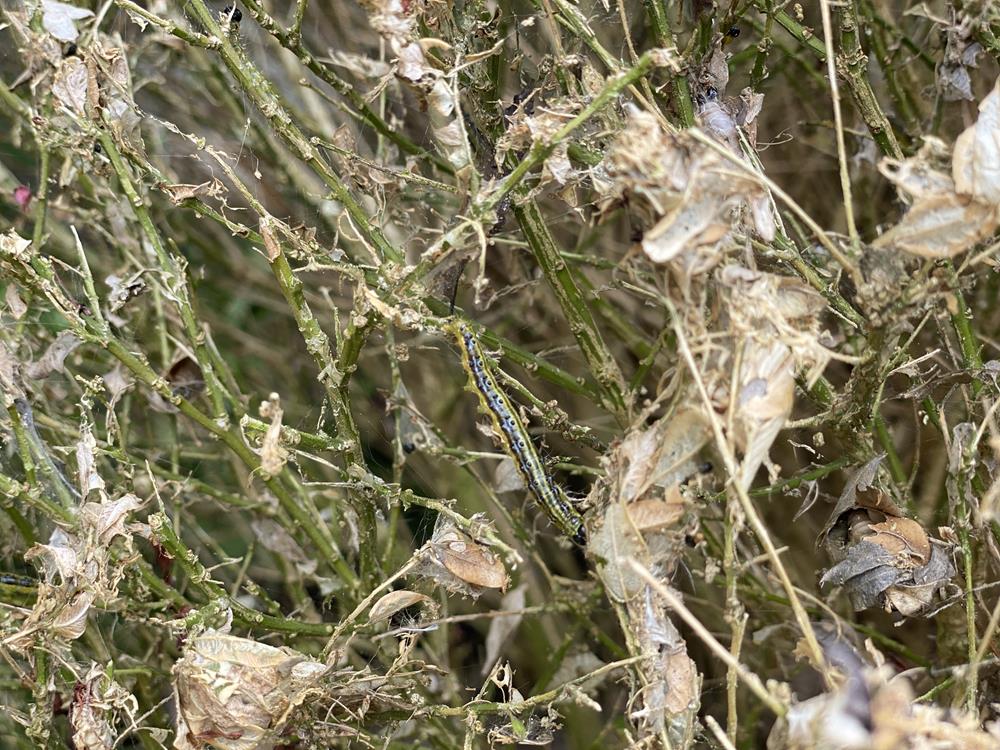
The newly hatched caterpillars can be identified by their greenish-yellow body with a black head. They maintain that colour, developing black and white stripes down their body as they age, with an adult caterpillar reaching up to 4cm in length.
The box hedge caterpillar grows into a moth that can be identified by its white wings with brown edging, although sometimes they can be all brown.
Where do box hedge caterpillars live?
Box hedge caterpillars were originally from Asia but migrated to many areas of Europe, including the UK around 2007/8. They are believed to have landed in London, but can now also be found in surrounding areas of Southern England.
They make their homes in box hedgerows and garden borders, feeding on the leaves of the plants, laying their eggs deep in the foliage on the underside of the leaves before covering the area in webbing.
What is the lifecycle of a box hedge caterpillar?
The box hedge caterpillar follows the lifecycle of any other moth or butterfly:
Eggs ➡️ caterpillar ➡️ pupae ➡️ moth.
You may start to see box hedge caterpillars from late March to early October depending on the weather. During that time they can have three of four lifecycles, each lasting around 45 days.
They may be hard to identify at first as they lay tiny yellow eggs on the underside of leaves. The eggs take 3 days to hatch, from which an abundance of caterpillars will hatch.
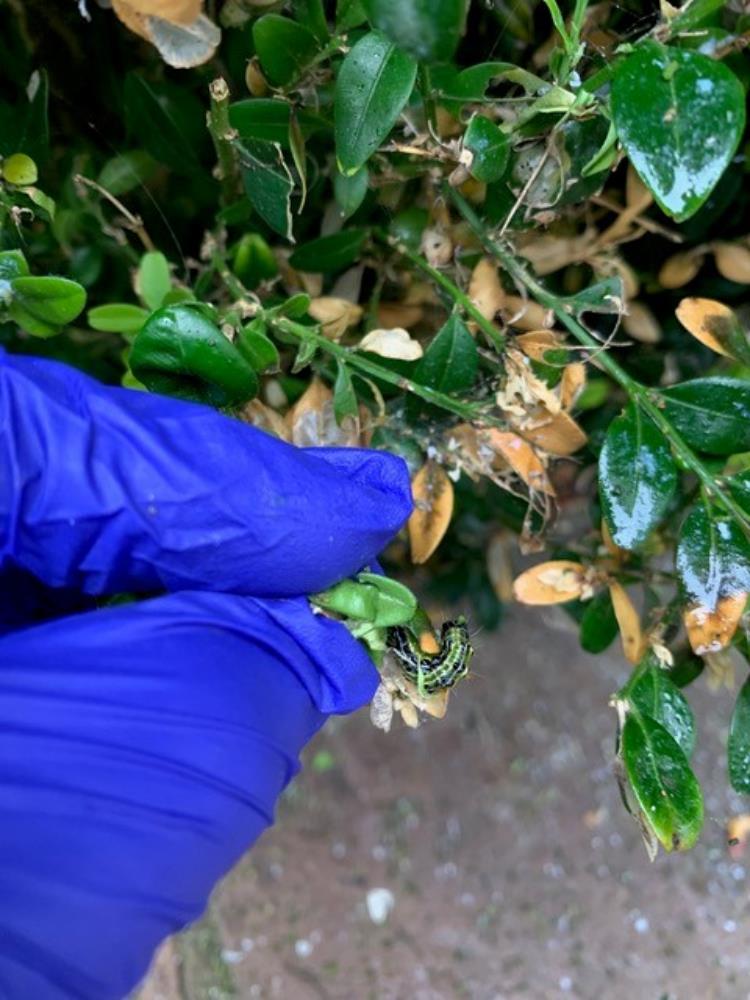
The caterpillars feed for two weeks before cocooning themselves as pupae where they grow for a week. Once hatched the female moths start laying eggs within two or three days, and the whole cycle starts again.
How do you treat box hedge caterpillars?
You may initially be fooled into thinking that any white webbing spotted on your hedge is a spider’s web with trapped particles of dust and foliage, but once the caterpillars hatch in their hundreds, you will undoubtedly know that you have an infestation of box hedge caterpillars.

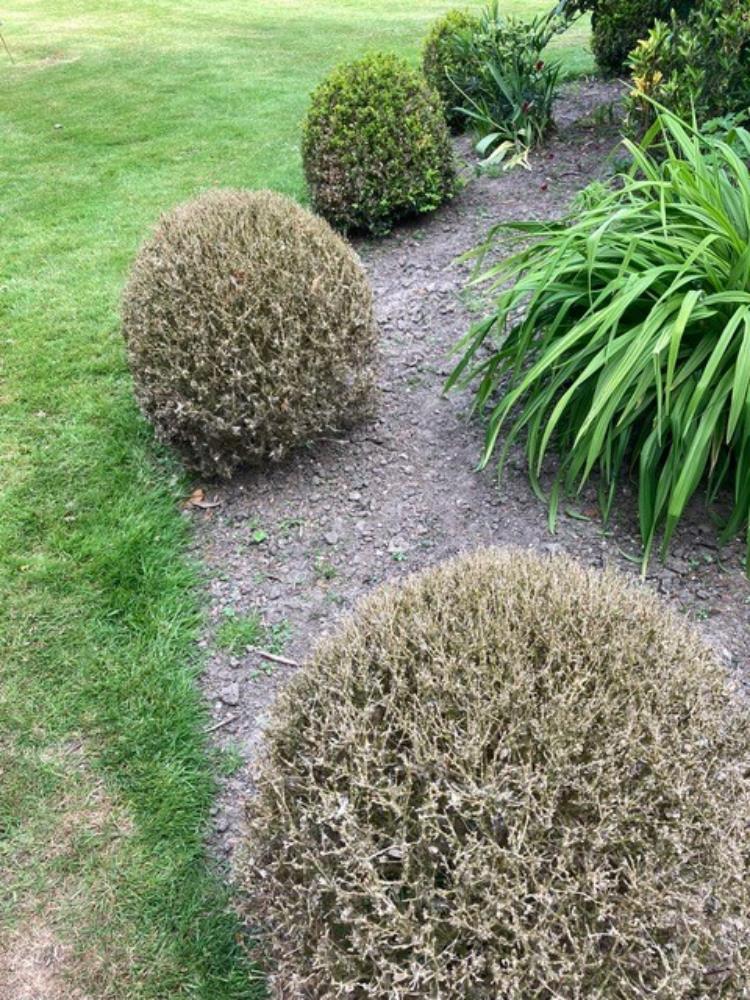
If you have been badly infected, you will start to see brown or faded patches in your hedges, especially around the base of the plant spreading upwards. This can happen at an alarming rate.
Due to their toxic taste, box hedge caterpillars are not prone to natural predators and they must be removed before they destroy your hedges.
If you catch them early enough (and are not too squeamish), you could remove the caterpillars by hand. This isn’t often feasible when they are located deep in the bush.
You could also try using a box hedge moth trap which works by attracting the male moth with female pheromones. The moths are then trapped preventing further lifecycles. Again this may not be suitable if you have a large infestation.
What other types of caterpillar cause issues?
We have recently been called out for jobs to treat brown-tailed moth caterpillars. Here you can see them on a hedge.

They can sometimes be hard to spot but the giveaway is the webbing, the silky webs that they spin to stick to the bushes that they’re inhabiting. The webs also protect them from danger, and they only emerge when they’re ready to pupate.

So take a look around your garden regularly to check for caterpillars, particularly if you spot any fine webs in your hedges.

Is the treatment we use safe for people, pets, and other wildlife?
Yes, in many cases we use a biological control product that will only affect the box moth caterpillars.
How quickly will the treatment work?
The treatment will start working immediately. Caterpillars will largely be killed within 24 hours.
Is the treatment guaranteed to work?
Yes, we guarantee that the treatment will work.
How long will it take to carry out the treatment?
We work as efficiently as possible to get the treatment actively working on the pest. The time taken will depend on the volume of plants and hedging needing treatment.
Will further treatment be necessary?
The box moths continue to be active and will lay their eggs on box plants throughout the summer. We do recommend up to 3 treatments during the summer period to ensure your plants remain pest free and healthy.
When should I trim the plants?
If the plants need trimming, it is better to do this before treatment or wait until at least 4 weeks after treatment.
When should I water the plants?
Please don’t water the plants for at least 24 hours. Watering too soon after treatment will make the treatment less effective.
How long will it take for my plants to recover from the caterpillar damage after they have been treated?
The plants should start to produce new leaves and shoots within 3 weeks following treatment. This can be further encouraged by feeding and watering. If the plants have not been treated and have been damaged very badly by the caterpillars over a long period, they may not recover and will need replacing.
Alternatives to box hedges
With box hedge caterpillars destroying gardens at an alarming rate, many gardeners are starting to replace their traditional box hedges and are making borders with other shrubs, plants, and herbs. If this is your preferred option, you may like to consider some of the following (depending on your soil type) :
Compacta “Berberis darwinii”
Corokia “Frosted chocolate”
Euonymus japonicus “green rocket or green spire”
Euonymus jean hughes
Germander
Ilex crenata
Japanese holly
Lavender
Logustrum ovalifolium
Lonicera nitida “Maigrun”
Photinia
Pittosporum “Collaig silver”
Red robin
RosemaryTaxus baccata “Repandens”
Call Eradipest for effective caterpillar treatment
We offer two options for treating box hedge caterpillars. The first is a pesticide (insecticide) which is extremely fast and effective. We also offer a biological control treatment which is slower but is extremely safe for pets and people. For this treatment we spray the plants with Bacillus bacteria which kills the caterpillars.
Please fill in the enquiry form below and we will be in touch soon.
Please be aware that our technicians operate across southern England including Hampshire, Sussex, Surrey and south London.
Box Moth Caterpillar Treatment Enquiry FormThank you for your interest in our Box Moth Caterpillar treatment services. Please fill out the form below with as much detail as possible to help us provide you with an accurate quote.
|
Im interested in accessing treatment for my box hedging – I am based in Kent in Tunbridge Wells and would like a quote please.
Thanks for your comment, I will ask one of the team to contact you.
I believe my hedges have been attacked this year by box hedge caterpillars as they are all of a sudden dying off and look like they r covered in webs. How much is the treatment for this please?
Hi Zoe, the best thing to do is book a callback at a convenient time and then we can discuss options with you. It does sound like you have caterpillars! Here’s the link to book one : https://eradipest.co.uk/book-a-callback/
Hi I have just spoken to Adam. We have the caterpillar eating our box hedging. It would be great if you could come out to help asap. Thank you!
We have 5 large box privets and have been stunned after returning from a holiday to find one decimated and the others being attacked. How much does the treatment cost and is it effective ?
Hi, if you give our office team a call they will be able to advise. The number is 01243 717606 – good luck!
Hello,
We are based in calverley and have just moved in to a property where we have found a lot of moths! Our hedges outside look like described so assuming it’s these creatures! Would be able to get a quote for removing these.
Hi, we are based on the south coast in England so you probably need to reach out to a local pest controller to deal with your caterpillars. Good luck!
Can you recommend someone in Cambridge area. My box is being decimated by these caterpillars although I’ve not seen any
Hi Kathleen, that must be so frustrating for you! We don’t have any pest control partners in that area but would recommend using Checkatrade to find a reputable business there. Good luck!